

Hey everyone,
Next Wednesday, May 13, at 2:30pm GMT, I'm doing a live build.
One hour, one internal tool, Claude Code on the screen the whole time.
To watch it happen in real time, for free, 👉 sign up here.
You’ll see the same workflow I run with paying clients:
Define the problem → open Claude Code in the right folder → ship the tool.
The whole point is to show you that the building is no longer the hard part. The thinking is.
I'll pick the tool live, and you can shout suggestions in the chat.
The goal? We'll go from blank file to working software in under 60 minutes.
Bring your laptop if you want to follow along, or just watch and steal the workflow.
We just published our biggest case study yet
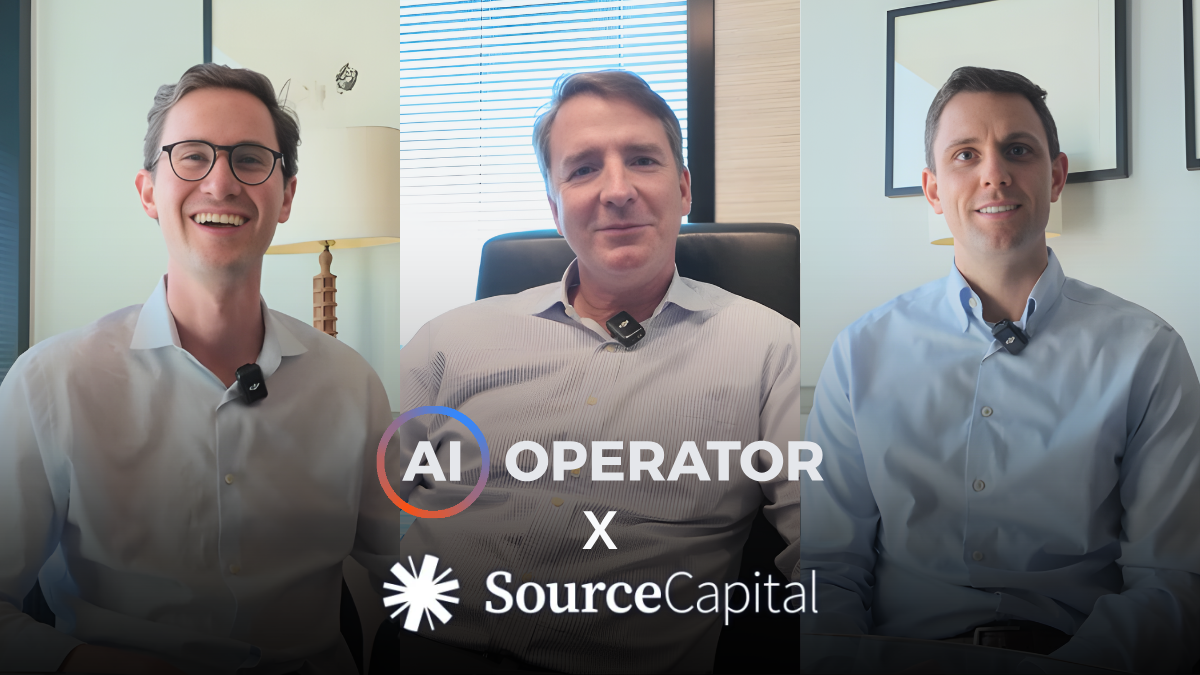
If you want to see what this work looks like over seven months instead of 60 minutes, the Source Capital story is now live on the site.
It started with one principal having a "holy cow" moment in week 2 of a shared cohort.
One PE firm. Three programs. 123 leaders trained. 28 portfolio companies across 15+ industries. 24 peer PE firms pulled in by the end.
Read the full case study:
This is the flywheel for how private equity adopts AI. If you're at a PE firm, or you sell into one, this is the playbook.
A huge thanks to Sam Allen, Ryan Johnson, and Tom Harbin for participating in the case study.
An open source alternative to Claude Design
Continuing the open source thread from the past few weeks.
I found another one worth watching: Nexu-IO/open-design. It's an open source alternative to Anthropic's Claude Design.
It runs locally and plugs into your coding agent CLI of choice: Claude Code, Cursor, Gemini.
I'm testing it right now, so I'll tell you what I find.
This is the pattern I keep seeing. Anthropic and OpenAI ship a closed feature. Three weeks later, the open source community ships their own version that runs on your machine, with your keys, in your terminal. Tolaria for vaults. Exo for email. Open Design for design tooling. The list keeps growing.
If you're curious, clone it and have a look: github.com/Nexu-IO/open-design.
How I file my Markdown so Claude Code knows where to start
Last week I told you my context library lives in local Markdown files, synced to Notion. A few of you asked how I keep it organized so Claude Code knows what's going on.
The trick: domain-named folders. Then I launch Claude Code from inside the folder for the work I'm about to do.
If I'm doing marketing work, I open my terminal in the marketing folder. The CLAUDE.md, the briefs, the past drafts are all right there. Claude Code reads the room.
If I'm doing sales work, I open it in the sales folder. Different rules, different agents, different priorities.
If I'm doing customer-specific work, I go into my 0-Customers folder. Then into that customer's named folder. Then I launch. Now Claude Code is working on Source Capital, or Mechanical Concepts, or whoever, with everything we've ever filed about them right at hand.
The folder is the prompt. You don't tell Claude Code what you're working on. You go to where the work lives, and it figures it out.
This is why the file system matters more now than it has in twenty years. Your folders are how you talk to your agent.
See you Wednesday!
That's it for this week. Quick reminder before I sign off.
May 13, 2:30pm GMT. I'll be inside Claude Code for an hour, shipping one internal tool from blank file to working software. Free to attend.
Bring questions. Bring a tool you've been wanting to ship. I'll show you how I'd do it.
Hit reply and tell me what you want me to build on the day.
Ciao,
Tim