

Hi everyone,
As the year ends, taking time to analyze what happened, and what you want to achieve next, is essential.
The most valuable way to use AI here isn’t to outsource reflection — “set my goals, tell me what to do next”.
Instead, work with AI to ask yourself better questions.
Over the holidays, I did my 2025 retrospective, and I only used AI to generate thought-provoking, brutally honest questions I wouldn’t have thought of by myself.
That process led to real clarity, and I’ll show you exactly how to do it in this week’s guide.
Taking a break from day-to-day work was just as important. As well as enjoying much-needed rest, I had space for new ideas to surface naturally without forcing productivity.
After that pause, everything clicked.
I’m heading into 2026 clear, energized, and focused — and I’d love for you to do the same.
Wishing you a very happy new year, from all of us at AI Operator! 🎉 🥳 🥂
Today at a Glance
The Guide: A comprehensive, end-of-year retrospective and 2026 planning session, with a little help from AI.
News: Meta invests in autonomous agents, AI goes from discovery into the diffusion phase, and AI education will protect against job losses.
Content: Watch highlights from The Knowledge Project Podcast’s most interesting conversations of the year, and my video about NotebookLM’s latest features.
Top Tools of 2025: These 7 tools shaped my 2025.
The Guide: Your New Year Retrospective and Planning Session
This AI-enhanced New Year planning session will force you to question yourself and do some hard thinking before you map out 2026.
Time: 45 minutes - 1 hour
Tools:
LLM: I used ChatGPT because it has the most comprehensive memory about me.
A note-taking app: I used Notion, but you could use any note-taker app (or pen and paper!)
Focus music: I used Brain.fm to get in the zone.
Step 1: Use AI to ask brutal questions
AI can help you come up with meaningful questions that go beyond the surface level.
Paste this prompt into ChatGPT:
Act as a reflective interviewer who knows my business context. Ask me 10–12 specific, uncomfortable questions about my 2025. Avoid generic questions. Draw on everything you know about me based on the conversations we’ve had over the past year. Focus on:
What I said I’d do vs what I shipped
Where demand was overestimated
What worked without effort
What required constant force
Where complexity increased without ROI
Then, copy and paste the questions into a notes app.
Put your phone down, music on, and answer freely - no editing, no AI.
The goal? Get your unfiltered thoughts down on the page.
Step 2: The question that changes everything
Answer this:
If I replayed 2025 with the same way of working — same priorities, same assumptions, same habits, same level of focus — would the outcome realistically improve?
In other words, consider how you showed up: what you chose to work on, how you made decisions, what you ignored, and where you spent energy.
Would you do it all the same next year?
If the honest answer is no, that’s the signal that 2026 needs different inputs, not just bigger ambitions.
Step 3: Let AI summarize patterns
Now paste your answers back into AI and ask it to:
Summarize the patterns in my answers. Highlight repeated friction, false assumptions, high-leverage actions, and where I’m confusing effort with progress.
You’re bringing in AI after the deep thinking is done.
You’ll get a high-level summary that cuts to the core of what you need to improve in 2026, and might even spot patterns or connections you missed.
Step 4: Planning 2026 with constraints
At this point, you’ve done the hard part:
AI asked the questions
You answered them honestly
AI helped surface patterns and insights
Now you can use those insights to plan 2026, without turning it into vague goal‑setting.
Start by asking AI:
Based on everything I’ve shared, help me define the constraints (not goals) for 2026. What should I do less of, stop entirely, or deliberately limit? What should be systemized or supported with AI?
Defining constraints can stop you from repeating the same mistakes as last year.
Examples of useful constraints:
Maximum number of active projects at once
Tools you will not add to your stack
Types of work you will no longer do manually
Decisions that must be supported by data or reflection
Turning insights into a 2026 plan
Next, ask AI to translate those constraints into a simple structure:
Using these constraints, help me outline a high-level plan for 2026. Break it into quarters. For each quarter, provide:
Primary focus
What I should NOT work on
What needs to be built, improved, or removed
Where AI can support execution without replacing thinking
This helps you set a direction without a rigid roadmap.
Quarter-by-quarter thinking
Next, you want to lock down what your focus is for each quarter.
A simple way to frame it might be:
Q1: Fix foundations and remove friction
Q2: Build and test with focus
Q3: Scale what works, kill what doesn’t
Q4: Consolidate, document, and prepare for the next cycle
You can ask AI to pressure‑test this:
Based on my past patterns, where am I most likely to overcommit or lose focus during the year? What safeguards should I put in place?
Final check
Before you finalize everything, step away from AI and ask yourself:
Does this feel realistically focused?
Am I protecting thinking time, not just output?
Where am I still tempted to repeat old habits?
Your goal for 2026 shouldn’t be to do more, but to operate differently, with AI supporting your systems, not running your decisions.
Key takeaways
Use AI to ask better questions, not to think or decide for you
Do the reflection work yourself before involving AI in synthesis
Look for patterns in behaviour and assumptions, not just outcomes
If repeating the same way of working wouldn’t change results, change the inputs
Plan 2026 around constraints and systems, not vague goals
Break the year into quarters with clear focus and explicit trade-offs
Let AI support execution and structure — keep judgment and direction human
News
Meta invests in autonomous AI agents
Meta announced that it will buy Manus, the Chinese-founded startup that claimed to have released the world's first general AI agent, capable of making decisions and executing tasks autonomously.
This is a major investment in advanced AI agents, signalling a shift from chatbots toward systems that can plan, execute, and improve tasks autonomously, embedding agents into real workflows.
Why it matters: Agents are becoming more and more capable, but we need humans to keep them on track.

Microsoft: 2026 is the year AI moves from experimentation to adoption
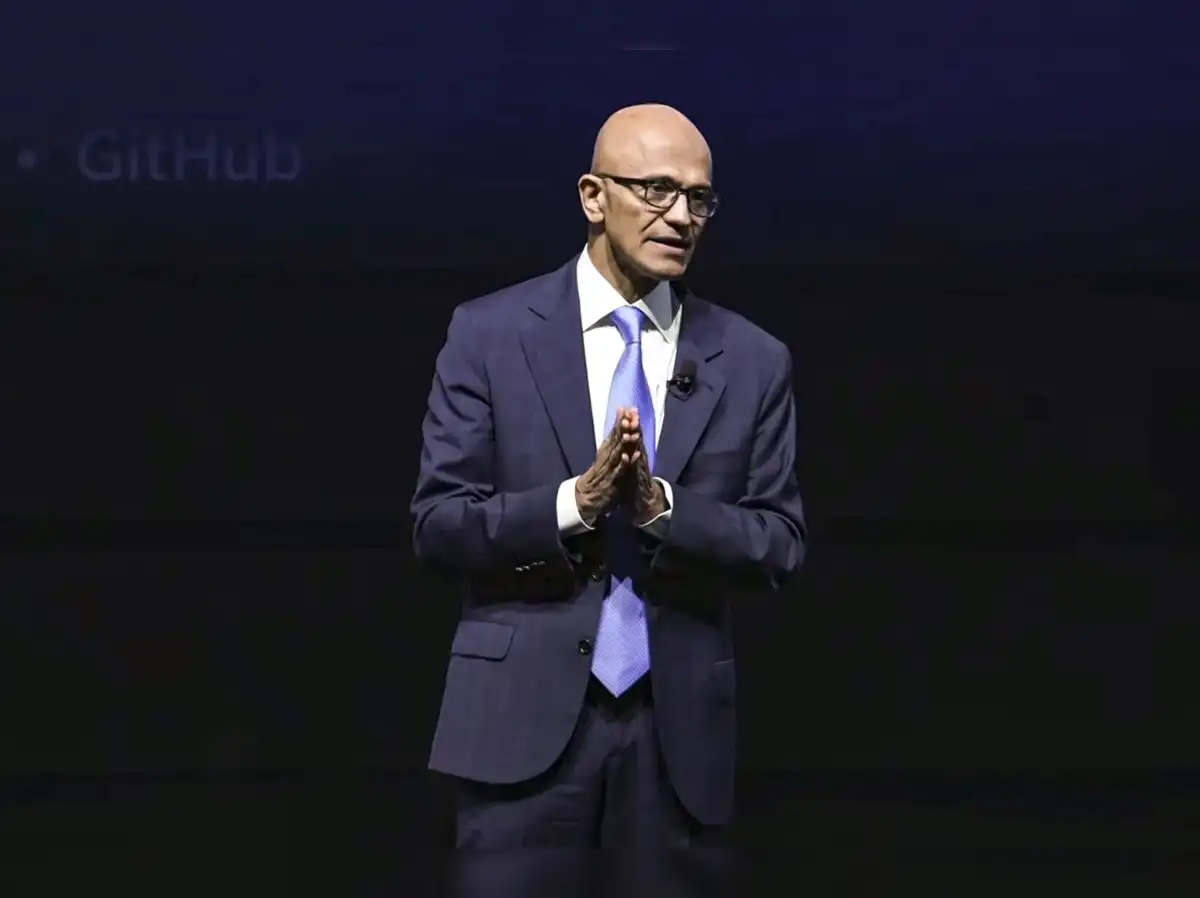
Microsoft CEO Satya Nadella said 2026 will mark AI’s transition from discovery to diffusion, where value comes from broad, practical use rather than constant breakthroughs.
Why it matters: Founders shouldn’t constantly chase novelty in 2026. Instead, they must figure out how to see through the hype and integrate AI successfully.
Geoffrey Hinton warns about job losses (but it’s not a signal to panic)
The so‑called “godfather of AI” warned that many jobs could disappear by 2026 — particularly roles that fail to adapt as AI becomes more deeply embedded in everyday work. This isn’t a signal to panic, though. It’s a reminder that AI is becoming part of the baseline, and those who learn how to work with it — rather than ignore it — will be the ones who stay ahead.
At AI Operator, we’re making a shift away from “AI-First” thinking, towards a more collaborative human + AI approach. Instead of outsourcing our thinking, we can learn to strengthen our skills with the right tools.

Content to Enjoy
How to be your best in 2026
This final episode of 2025 is a reminder that AI can give you quick answers, but only humans with experience, judgment, and first-principles thinking can make good decisions.
Across conversations on leadership, resilience, and first-principles thinking, one idea stands out: AI is great at surfacing information, but humans must decide what matters.
If you’re about to start the 2025 retrospective and 2026 planning session in this guide, I’d recommend watching this first. It’s the perfect mindset reset.
New powerful NotebookLM features
In my most recent YouTube video, I talk about the latest NotebookLM features you need to know about, with 3 use cases you can try today: sales call prep, client onboarding, and content repurposing.
Watch it here:
🏆 Tools of 2025 🏆
To celebrate the end of the year, here are my most-loved tools of 2025:
Claude Code — My absolute number 1, most-loved AI tool of 2025. I used it to build powerful systems that helped me scale the business.
Cursor — An AI-powered code editor that lets you write and edit code by describing what you want in plain English, inside your codebase. I use it together with Claude Code.
ChatGPT — A reliable thinking partner, ChatGPT’s impressive memory means it knows me better than any other LLM.
Notion — After a brief flirtation with ClickUp, I decided that Notion was the best knowledge management tool for AI Operator. It consolidates notes, docs, meetings, projects and tasks into a convenient, moldable, and AI-enhanced workspace that’s easy for everyone.
Granola — Hands down my favorite AI note-taker, it helps me capture all the crucial details.
NotebookLM — An AI research assistant that’s amazing at distilling information and presenting it back in a digestible format. It’s one of my most-used, favorite tools.
Brain.fm — Re-activating my subscription was one of the best decisions I made in 2025. Good tunes that actually skyrocket your productivity and force you to lock in.
TL;DR
Reflect and plan: Use AI to generate brutal questions to uncover 2025's friction points, but do the actual thinking and answering yourself to ensure real clarity.
Ask yourself: If you repeat your 2025 habits exactly, will 2026 actually be better? If the answer is no, it's time to change your inputs, not just your ambitions.
Organize your year into quarters: Get AI to pressure-test where you are likely to falter.
News: Meta’s acquisition of Manus and Microsoft’s "diffusion" phase signal a shift from AI as a novelty to AI as a practical, autonomous agent for execution.
Content to enjoy: A mindset reset on leadership and resilience to prepare you for the year ahead. Plus, my latest video about NotebookLM.
My Top Tools: A roundup of the best software from 2025, including Claude Code, Cursor, and Granola.
Wishing you all a happy, healthy, and successful new year!
Thanks for all your support in 2025. I can’t wait to see what we achieve in 2026!